
Why Soffit and Fascia Problems Are Often Mistaken for Roof Leaks
A water stain shows up on the ceiling, or paint starts peeling along the roofline, and almost every homeowner reaches the same conclusion: the roof is leaking. They call a roofer and brace for the worst.
More often than you’d think, they’re only half right. Water is getting in somewhere, but the roof itself can be perfectly sound. The real culprit is hiding in plain sight, just below it, in the soffit and fascia.
“George sees this all the time,” says Michael, the company’s longtime salesman. “Someone calls thinking they need a whole new roof, and what they actually need is a couple of fascia boards and some ventilation work. The symptoms look the same from the ground.”
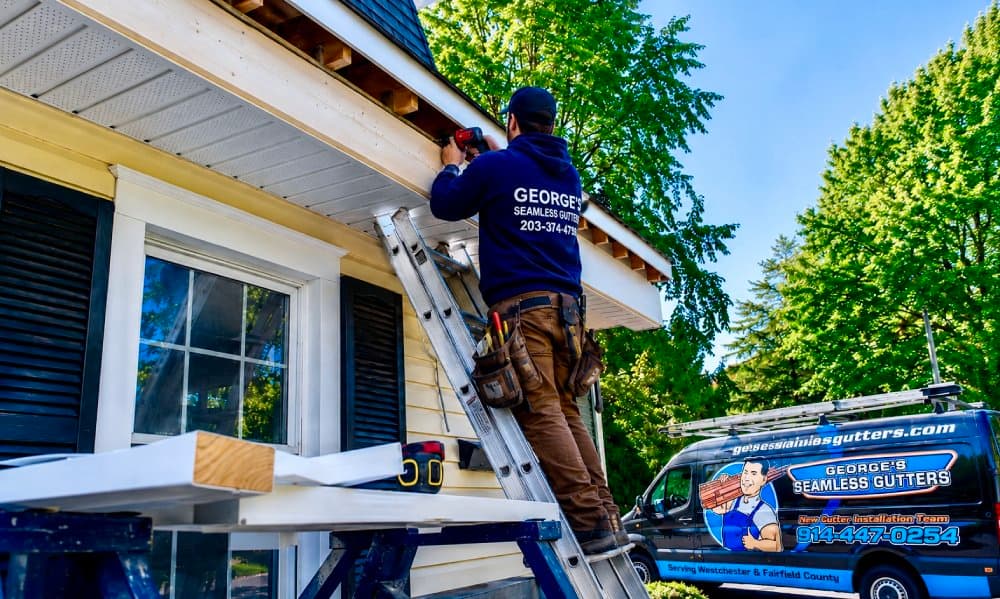
George Curi knows this roofline better than almost anyone in the county. He’s a big presence on a ladder, the kind of guy who shakes your hand, asks about your kids, and means it. He’s coached youth soccer in Newtown for years, built this company from nothing over two decades, and still climbs the ladder himself on plenty of jobs. Ask anyone who has worked with him, and they’ll tell you the same thing: George doesn’t sell a job he doesn’t believe in.
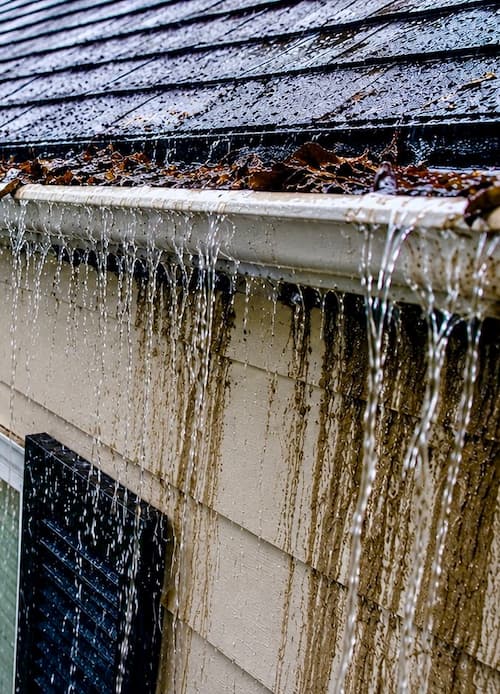
The two terms get mixed up constantly, so here’s the plain version. The fascia is the vertical board along the roof’s edge that your gutters bolt onto. The soffit is the underside, the horizontal panel tucked beneath the overhang, the part you see when you look up under your eaves.
Together, they close off the gap where your attic meets the outside world. When they fail, water, pests, and bad air all find their way in through the same opening. Our soffit and fascia repair page covers how these boards work together in more detail.
Four Seasons, Four Different Kinds of Trouble
Connecticut doesn’t make this easy on a roofline. Winter is hardest of all. Ice dams form when heat escapes through a poorly ventilated attic, melts snow above the warm spots, and refreezes at the cold eave, forcing trapped water back under the shingles and into the fascia. Spring’s heavy, sustained rain tests every seam, and a fascia already softened by winter takes on more than it can handle. Summer’s humidity keeps wood damp longer after every storm, giving rot and mildew time to settle in. Fall fills the gutters with leaves, so the next hard rain has only one place left to go: straight over the edge and down the face of the board.
“George believes Fairfield County’s freeze-thaw cycle is the toughest test any roofline goes through,” Michael explains. “It’s not one big storm. It’s the slow wear of four seasons, year after year.”


A failing fascia board rarely announces itself all at once. Look for peeling or bubbling paint along the roofline, wood that feels soft or spongy when pressed, dark streaking beneath the gutters, or gaps where the board has pulled away from the house. Soffit damage often shows up indoors as drafts in an upstairs room, a musty smell in the attic, or signs that squirrels or wasps have found an opening.
“George recommends homeowners walk their roofline once a season, not once a year,” says Michael. “Catch a soft board early; it’s a simple repair. Catch it five years late, it’s a much bigger job.”
This is the part most homeowners never connect to their soffit. It isn’t just a cosmetic panel; it’s the intake side of your attic’s ventilation system, pulling in fresh air so warm, moist air has somewhere to go besides your roof deck. Building scientists studying roof failures across the Northeast have grown increasingly clear on this point: a blocked or damaged soffit traps moisture against the roof deck, and that trapped moisture shortens a roof’s life well ahead of schedule. It’s a quieter problem than a leak, but often a more expensive one.


Your fascia sits within inches of your gutter, so it’s the first thing to suffer when that gutter clogs or loses its pitch. Water that should be moving through the system instead sits against the wood and starts rotting it from the inside out, long before any stain shows on the surface. Keeping up with seasonal gutter cleaning is one of the simplest ways to protect the fascia underneath.
“George suggests thinking of your gutter and fascia as one connected system, not two separate parts,” Michael notes. “Keep the gutter clear and pitched right, and the fascia takes care of itself.”
Ask any roofer in Fairfield County, and you’ll hear the same story: soffit and fascia damage turns up constantly during a roof replacement, once the old shingles come off and the roofline is finally exposed. By then, it’s been quietly deteriorating for years behind paint and shadow.
Repair or Replace? It Depends on the House

Fairfield County’s housing stock runs the full range, from pre-Revolutionary farmhouses in Newtown and grand Victorians in Bridgeport to brand-new construction in towns across the county. A historic home may have solid-wood fascia worth saving with careful, matching repair work. A newer home with composite or aluminum trim often calls for a straightforward replacement of just the damaged run.
“George thinks the house should tell you which way to go,” Michael says. “Saving original material is sometimes the right call on an older home, for its character and the budget both. On a newer build, replacing the damaged section usually makes more sense.”
Walk your roofline and check off what you see before you call about a roof repair.
- Paint peeling or bubbling along the roof edge
- Wood that feels soft, spongy, or crumbles when pressed
- Dark streaking or staining beneath the gutter line
- Visible gaps between the fascia and the house
- Sagging or pulling-away gutters
- Musty smell or drafts in an upstairs room
- Signs of pests (wasps, squirrels, birds) near the eaves
- Gutters that overflow during moderate rain, not just storms
- Last soffit and fascia inspection was more than a year ago
- Home is an older construction with original wood trim
- Home is newer construction, never inspected since closing
If you checked two or more boxes, it’s worth a call before you assume the worst about your roof.
George built this company in one of the most competitive home service markets in the country, and he’s grateful for every customer who’s stuck with him because of it. If your roof seems to be leaking, look one layer down first. Call George’s Seamless Gutters for an honest, no-pressure assessment of your soffit, fascia, and gutter system. It might save you from a roof job you never actually needed.