
Are Gutter Guards Worth It in Connecticut? What Homeowners Need to Know Before Investing

It’s the question George Curi hears more than almost any other, usually from a homeowner standing in the driveway looking up at a gutter full of last fall’s leaves. Are gutter guards actually worth the money, or are they just another upsell?
“George gets asked this constantly,” says Michael, the company’s longtime salesman. “And the honest answer isn’t yes for everybody and no for everybody. It depends on your trees, your roofline, and what you’re trying to solve.”
George has been climbing ladders in Fairfield County for more than two decades, and he built this company the old-fashioned way, one satisfied neighbor at a time. When George tells you straight whether a product is worth your money, it’s because he has genuinely tested it on roofs just like yours.
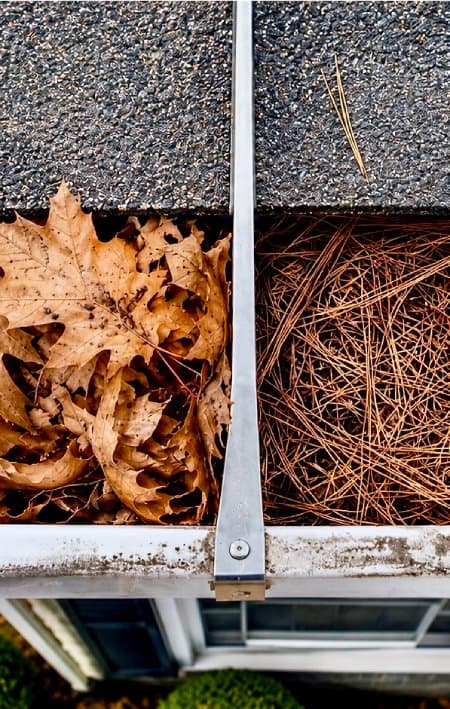
Here’s something most homeowners never think about until they own a wooded lot: oak debris and pine debris behave completely differently in a gutter, and that difference matters enormously when choosing protection.
Oak leaves are broad and flat. They tend to sit on top of a gutter guard, dry out, and be easily blown away or brushed off. Most standard mesh and screen guards handle oak leaves just fine.

Pine needles are another story entirely. They’re thin and narrow, shedding nearly year-round rather than just once in the fall. National surveys of gutter guard owners published in 2025 found that roughly a third of homeowners with significant pine coverage still dealt with needle-related clogs, almost always because their guard’s openings were sized for leaves, not needles. Pine needles slip through standard mesh, wedge into screens, and can even work their way past reverse curve guards during a hard rain.
“George recommends a tighter micro mesh for any property with mature pines,” Michael explains. “It’s a different debris problem, and it needs a different solution.”
This distinction matters a great deal in towns like Ridgefield, Newtown, Weston, Easton, and Redding, where large wooded lots and mixed forest canopy are simply part of life. A property backed up to conservation land in Redding or a long, tree-lined driveway in Weston is going to demand more from a gutter guard than a newer build on a cleared half-acre lot.
Mesh, Screen, or Surface Tension: Which One Fits Your Home?
There isn’t a single best gutter guard, only the best one for your particular trees and roofline.
- Screens are the most affordable option and work reasonably well for larger debris, but their wider openings let smaller material through, especially needles and seed pods.
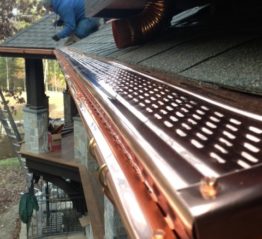
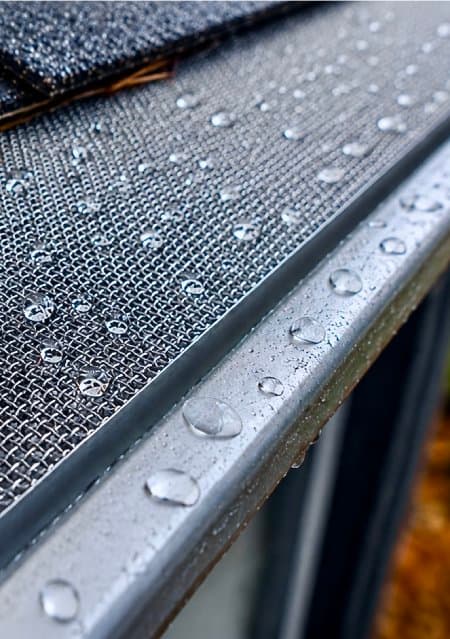
- Fine-mesh guards, including the Shur Flo and LeafTek systems that George's team installs regularly, provide a finer barrier that performs well on most mixed deciduous trees in Fairfield County.
- Surface tension guards, sometimes called reverse-curve systems, use a curved hood that allows water to cling and flow in while debris slides off the edge. They look clean and work beautifully on heavy leaf debris, but in a true downpour or under a thick pine canopy, performance can suffer.
“George believes the right guard is the one matched to the actual trees on your property, not whatever is cheapest or most heavily advertised,” Michael says. “A guard built for a maple-lined street in Fairfield isn’t necessarily the right call for a wooded acre in Redding.”
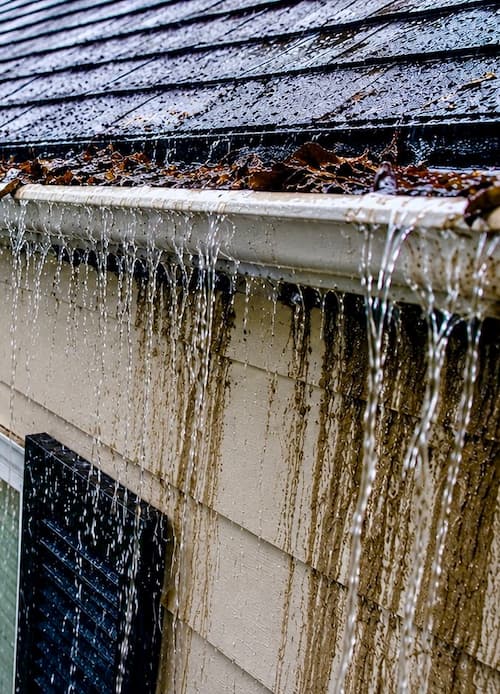
Gutter guards are not magic. They dramatically reduce clogging and cut your cleaning schedule, often in half, but they are a mitigation tool, not a permanent solution. Even the best system will collect some debris on the surface over time, and pollen, fine grit, and wind-driven material can still occasionally work their way in.
“George thinks the biggest misconception out there is that guards mean you never touch your gutters again,” Michael notes. “That’s just not true, and anyone who tells you otherwise is selling you something. What’s true is you’ll go from cleaning twice a year to maybe checking once.”
Homes on heavily wooded lots, homes with steep or complex rooflines, and older homes with original gutter systems tend to need more attention even after guards are installed. So does any home near pines, given how needles behave differently from leaves.
“George suggests every homeowner still walk their gutters once a year, guards or not,” Michael says. “It takes ten minutes, and it catches small problems before they become expensive ones.”
- Property has mature oak, maple, or other broadleaf trees nearby
- Property has pine, spruce, or other needle-bearing evergreens nearby
- Home sits on a wooded or heavily treed lot (common in Ridgefield, Newtown, Weston, Easton, and Redding)
- Gutters currently require cleaning more than twice a year
- Roofline includes valleys, steep pitches, or hard-to-reach sections
- Home is an older construction with original gutter and fascia systems
- Budget allows for fine mesh or micro mesh if pine debris is present
- Comfortable with light annual maintenance even after guards are installed
- Have requested a free, in-person evaluation from George's team
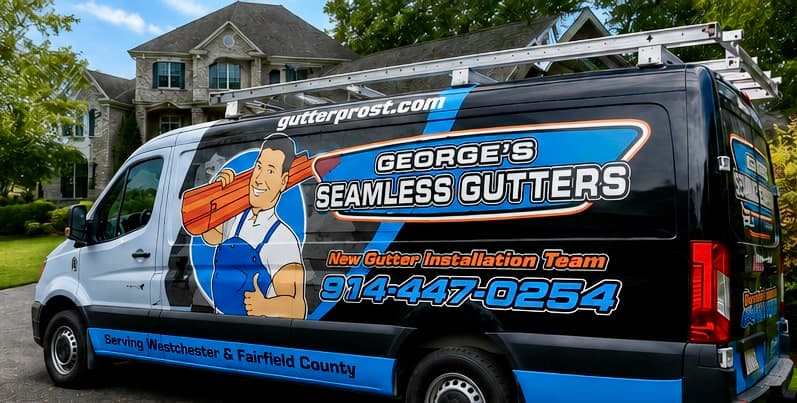
George built his business in one of the most competitive home service markets in the country, and he’s proud that so many Fairfield County families call him back year after year. If you’re weighing whether gutter guards make sense for your home, give George’s team a look at your roofline first. The right answer depends on your trees, not a sales pitch.
Contact George’s Seamless Gutters for an honest, no-pressure evaluation of your gutter guard options.