
The Hidden Cost of Ignoring Small Gutter Problems
Here’s something we hear more than almost anything else at George’s Seamless Gutters: “I knew something was off, but I figured it could wait.”
We understand. Life is busy. A gutter that’s pulling away from the fascia a little, or dripping at a seam after a rainstorm, doesn’t feel urgent. It doesn’t look urgent. And for a while, it isn’t. But gutters are one of those systems on your home where small problems have a way of quietly becoming large, expensive ones — and by the time most homeowners call us, the damage has already spread well beyond the gutter itself.
This one is for the homeowner who caught something early and is wondering whether it’s worth addressing now. The short answer is yes. Here’s the longer one.

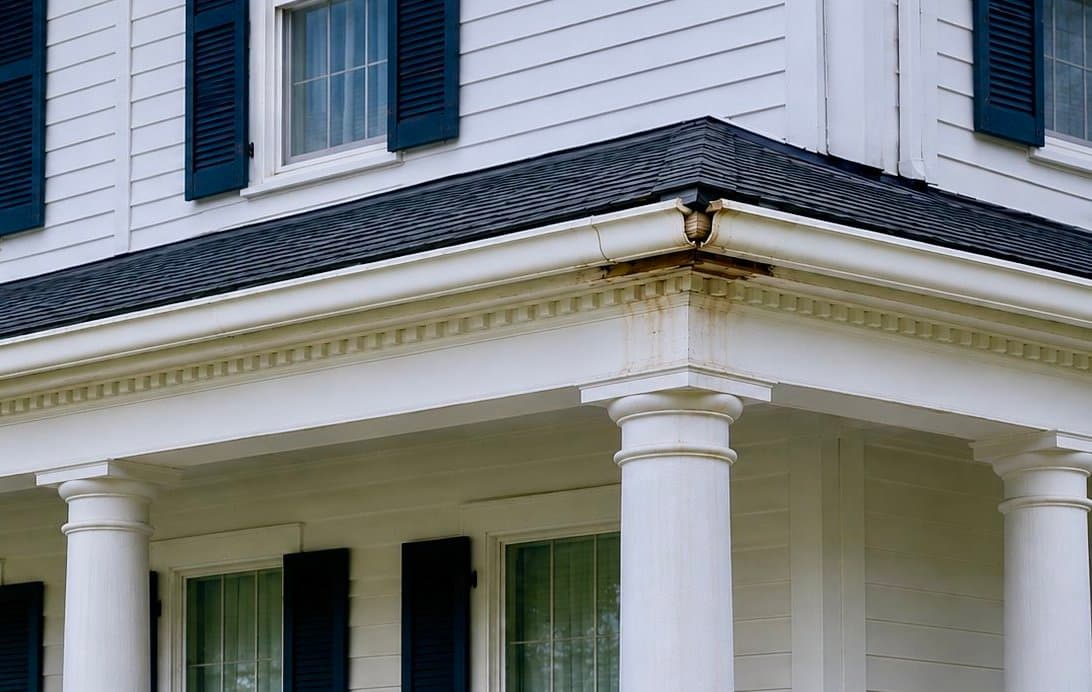
A dripping seam or a small hole in a gutter section seems minor. Water is dripping, not pouring, and most of it is still going where it’s supposed to go. But that small, consistent drip lands on your fascia board, the horizontal wood trim that runs along your roofline and holds the gutter in place, and it stays there. Wood absorbs moisture. Moisture leads to rot. Rot spreads.
George thinks fascia rot is one of the most frustrating outcomes he sees, because it’s so preventable: “By the time we get the call and pull a rotted fascia board, I know that problem started as a drip that somebody noticed and didn’t act on. The gutter repair might have been a couple of hundred dollars. The fascia replacement, and sometimes the soffit behind it, is a different conversation entirely.”
What starts as a gutter issue becomes a carpentry issue. Catching it early keeps it simple.
Gutter hangers are the hardware that attaches your gutters to the fascia. Over years of freeze-thaw cycles, the weight of ice and debris, and the expansion and contraction that comes with Connecticut winters, hangers can work loose. When they do, the gutter begins to sag.
A sagging gutter doesn’t drain properly. Water pools in the low spots, adds weight, loosens the hanger, and the cycle accelerates. Eventually, the gutter separates from the house entirely, and now you have a section of gutter hanging or fallen, leaving an unprotected roofline that dumps water directly onto your foundation.

“George recommends walking around your house after a heavy rain and watching how your gutters are performing,” says George. “Are they draining? Is water overflowing anywhere? Is the profile straight and even, or do you see a dip somewhere? That dip is a loose hanger. It’s an easy fix if you catch it. It’s a bigger job if you don’t.”

Gutters need to slope slightly toward the downspout, typically about a quarter inch for every ten feet of run, to drain properly. If the pitch is off, water sits. Standing water in a gutter is a breeding ground for mosquitoes, accelerates rust and corrosion, adds weight that stresses the hangers, and overflows in ways that send water exactly where you don’t want it.
George suggests that if your gutters always seem to be full of standing water after the rain has stopped, that’s a pitch issue worth addressing: “It’s not complicated to fix pitch when we catch it early. We adjust the hangers, re-slope the run, and ensure the system drains as it should. Left too long, though, you can end up with corrosion damage to the gutter itself and hanger failure from the constant weight. A small adjustment becomes a full section replacement.”
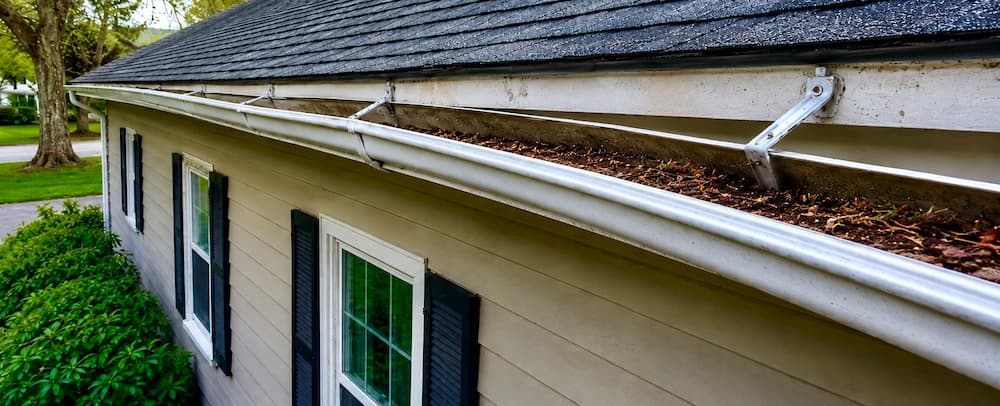
This is where homeowners start to really feel the cost of a neglected gutter system. Gutters exist to move water away from your foundation. When they’re not doing that job, whether because they’re clogged, sagging, improperly pitched, or missing sections entirely, that water lands at your foundation instead of being carried away from it.
Over time, water pooling at the foundation creates hydrostatic pressure. Basements get wet. Crawl spaces develop mold. Foundation walls develop cracks. And the landscaping beds below your roofline get eroded by the steady impact of water pouring off an uncontrolled roofline.
“Michael always tells homeowners that a wet basement is a gutter problem until proven otherwise,” says Michael. “It’s amazing how often someone calls us about gutters and mentions almost as an afterthought that their basement gets water after heavy rains. Nine times out of ten, fixing the gutter system is a significant part of solving that problem.”
The gutter repair that could have been scheduled on a convenient afternoon becomes a foundation waterproofing project that disrupts your home for days. The math on acting early is not complicated.
Fairfield County homeowners know ice dams. They form when heat escapes through the roof, melts snow near the ridge, and that water refreezes at the cold eave line, which is right where your gutter sits. A gutter that’s already partially blocked with debris or standing water gives ice dams more surface area to grip. The weight of ice can pull gutters completely off a home and damage the roof edge in the process.
Keeping gutters clean, properly pitched, and functioning through the fall reduces the conditions that allow ice dams to get a serious foothold. It’s not a complete solution to ice dam prevention, but it’s an important part of the picture.


We’ll say it plainly: most major gutter repairs start as minor issues that could have been fixed years earlier. A loose hanger. A dripping seam. A slight sag in a run that you noticed but figured would hold another season. These are the calls we wish we’d gotten sooner, because we know what the alternative looks like.
If something doesn’t look right with your gutters, whether you’re in Stamford, Danbury, Trumbull, or anywhere across Fairfield County, give us a call. We’ll come out, take a look, and give you an honest assessment. No pressure, no upsell, just a straight answer from people who’ve been doing this for a long time and take it seriously.