Ice Dams Don’t Automatically Mean Roof Failure — A Fairfield County Perspective
This winter felt different in Fairfield County — because it was.
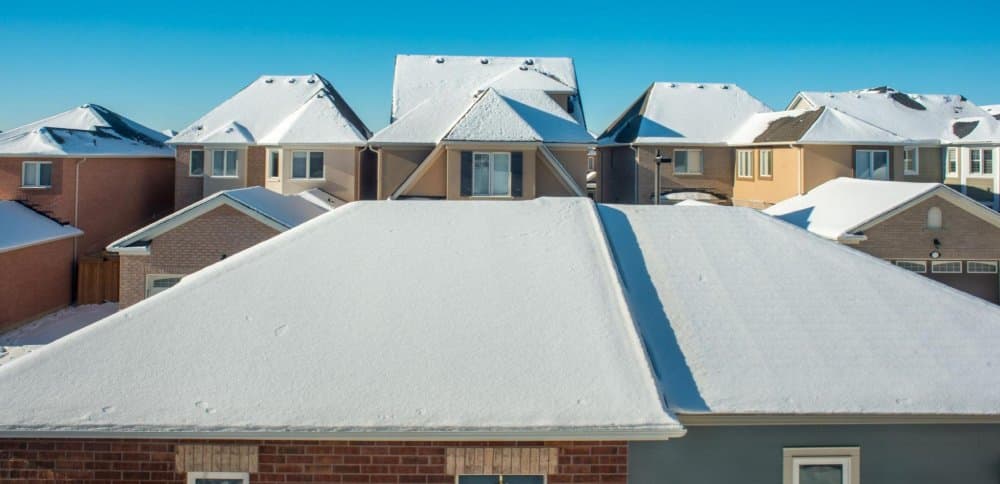
After a few relatively mild seasons, we saw our first major storm in several years. Heavy snowfall followed by sustained bitter cold created the kind of conditions that remind homeowners what a true New England winter can do.
And with that came the return of ice dams.
Let’s put this into perspective.
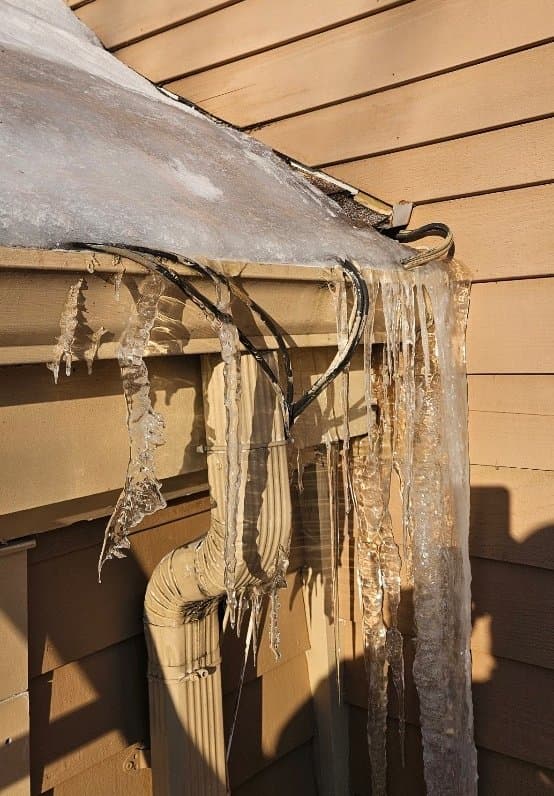
Ice dams are caused by melt and refreeze. Snow melts higher up on the roof and refreezes at the colder eaves. That process alone does not mean:
Your roof failed
Your installer cut corners
You need a replacement
Icicles are common. Ice at the roof edge is common.
Is water getting inside the home?
If there are no interior stains, no wet insulation, and no active leaks, you’re usually looking at winter physics — not structural failure.
What Made January 25th So Impactful
The January 25th storm delivered significant snow accumulation — the first major event like this in a few years.
What compounded the issue wasn’t just snowfall. It was:
The deep, sustained cold that followed
Limited thaw windows
Snow that remained on roofs for weeks
That combination allowed thick ice dams to form and stay in place well into February.
When you haven’t had a storm like that in several seasons, the buildup can feel dramatic. But dramatic doesn’t automatically mean catastrophic.
There’s a lot of online content showing commercial steam systems breaking apart ice dams.
Here in Fairfield County, that steaming technique is not commonly available. It requires specialized equipment and trained operators, and very few companies offer it locally.
What we do provide — and what makes long-term sense — are properly designed roof and gutter heating systems.
Strategic heating cable systems can:
Maintain open drainage channels
Reduce repeat freeze-thaw buildup
Protect fascia and gutter systems
Minimize long-term stress on roof edges
If active snow and ice buildup needs to be addressed safely, learn more about our snow management services here.
When Ice Becomes a Real Problem
Ice dams shift from “normal winter event” to “action required” when:
Water backs up under shingles
Interior drywall shows staining
Gutters pull away under ice weight
Soffit and fascia begin deteriorating
At All Fairfield Gutters, we’ve responded to homes where repeated ice cycles exposed vulnerable roof edges or aging materials. But those cases are typically long-term system issues — not one storm.
Proudly Local. Proudly Recognized.
Our team was recently cited in an article in the Redding Sentinel discussing winter roof conditions and ice dam risks in the region. We’re proud to be a local voice homeowners turn to when conditions turn harsh.
Got it. Let’s take a different angle.
Instead of explaining what ice dams are again, this one will focus on risk assessment, cost reality, and what Fairfield homeowners should actually do next.